Country
Ethiopia
Population
102.4 million
Energy Access
42.9%
People Without Electricity
58,470,400

Uganda and Ethiopia are agrarian economies: agricultural performance is central to national development. Uganda has a population of ~50 million people, and Ethiopia has ~120 million.
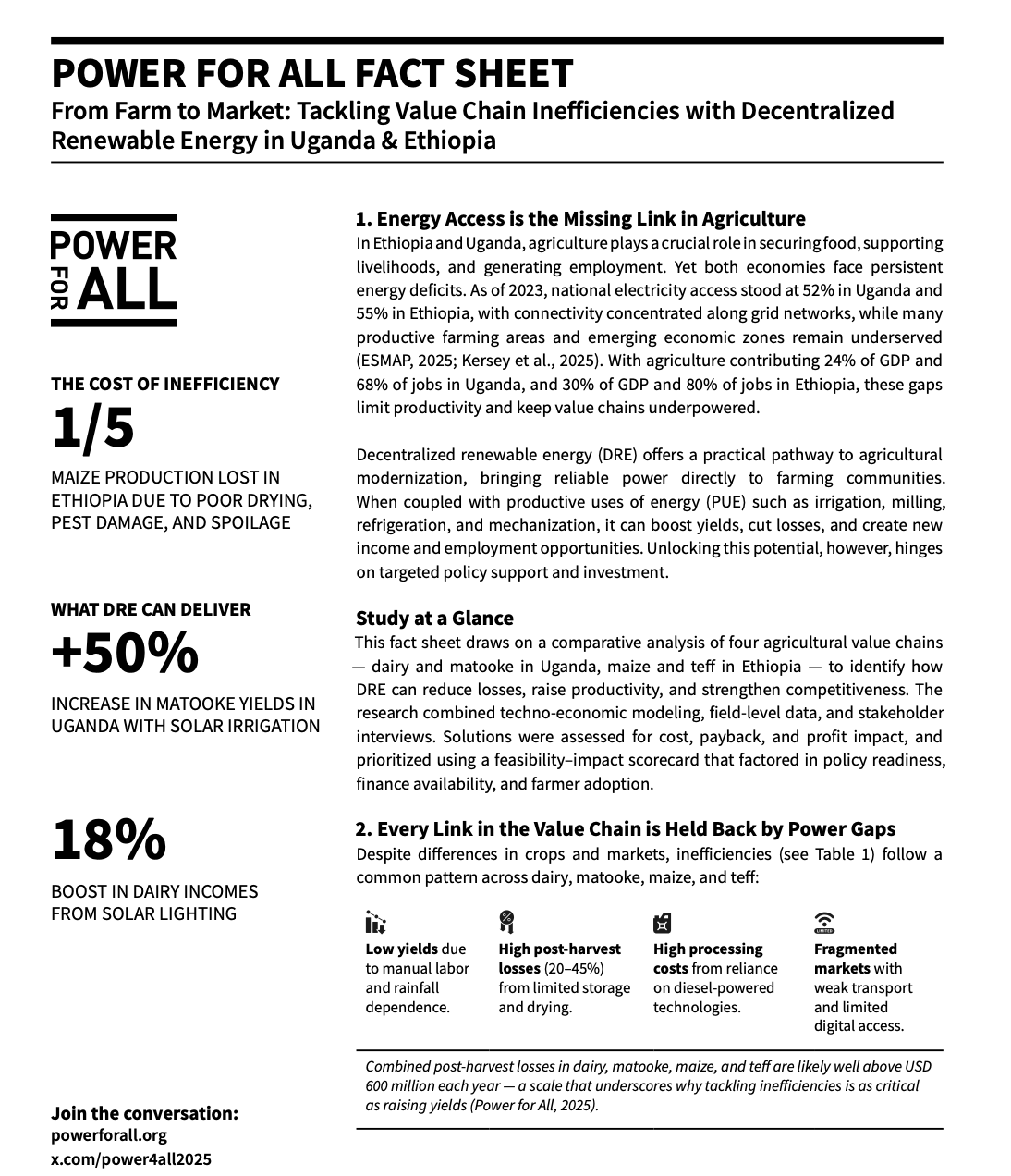
Energy Access is the missing link in agriculture - In Ethiopia and Uganda, agriculture plays a crucial role in securing food, supporting livelihoods, and generating employment. Yet both economies face persistent energy deficits.
Agriculture is central to livelihoods and food security across Ethiopia and Uganda — yet much of its potential remains underpowered. Low energy access continues to limit production, processing, storage, and market connectivity. In this episode, we sit down with Ashenafi Mulugeta to discuss how DRE is unlocking new opportunities for farmers—boosting yields, reducing losses, and enabling value-added activities that strengthen rural livelihoods. Drawing on new research and firsthand experience, the conversation explores what it will take to scale these solutions, including the policies, financing models, and partnerships needed to move from pilot projects to widespread impact.
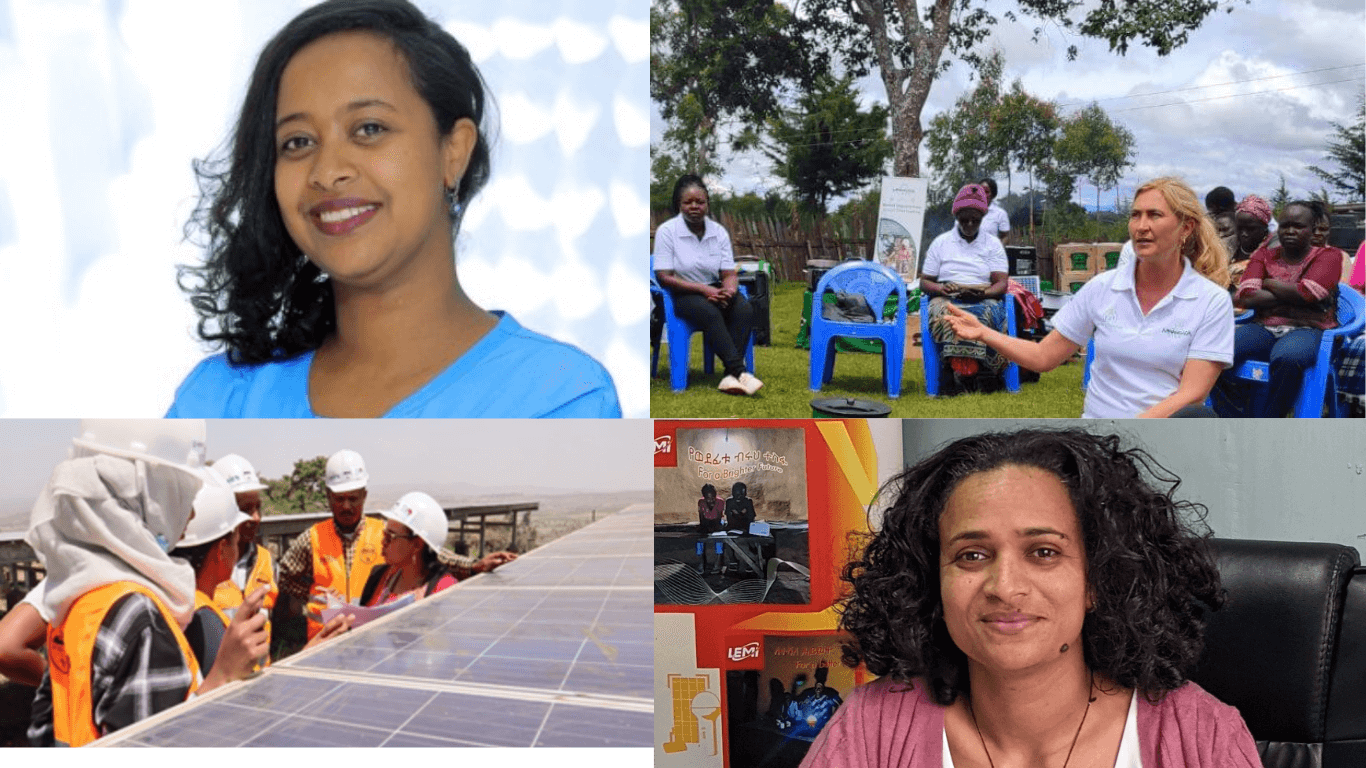
The renewable energy sector, a growing and innovative industry, is improving career opportunities for women and youth. Reliable and clean power also empowers female entrepreneurs to start businesses, further promoting diversity within communities. On International Women’s Day we want to take a moment to celebrate some of these successes, focusing on East Africa and what these amazing women have achieved. The energy transition is more than a technological shift; it's a chance to enhance social and economic inclusivity. This year’s theme, Accelerate Action, stresses the importance of taking swift and decisive steps to achieve gender equality.

The journey towards a diverse workforce in the renewable energy sector is filled with obstacles. However, thanks to the tireless work of organizations such as the Ethiopian Women in Energy Association (EWiEn) and SHEnergy, leaders like Lewam, and their collaborative partners, the vision of a sustainable and equitable future is increasingly within reach.
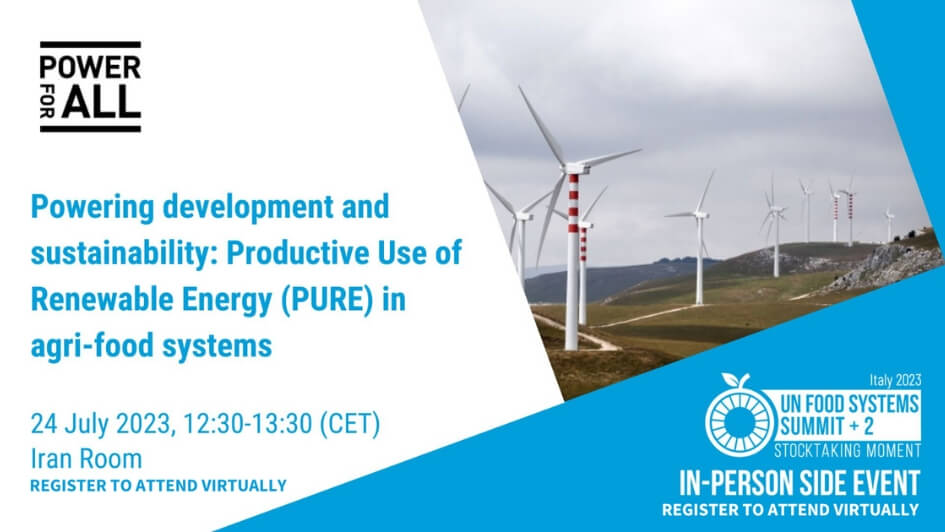
In Ethiopia, Power For All has entered into a pivotal partnership with the Ethiopian Solar Energy Development Association (ESEDA). As part of this collaboration, Power For All is set to provide Technical Assistance to revise the customs handbook that was initially developed by ACE-TAF two years ago.