Country
Uganda
Population
43.25 million
Energy Access
20%
People Without Electricity
34,000,000
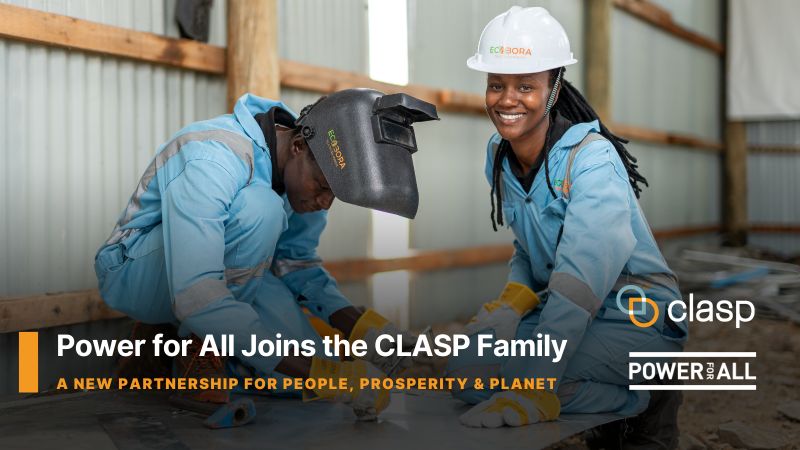
Strong and agile partnerships have been key to unlocking climate progress and sustainable development objectives. Today, a new collaboration emerges: we are delighted to announce that Power for All will join forces with CLASP.

Uganda and Ethiopia are agrarian economies: agricultural performance is central to national development. Uganda has a population of ~50 million people, and Ethiopia has ~120 million.
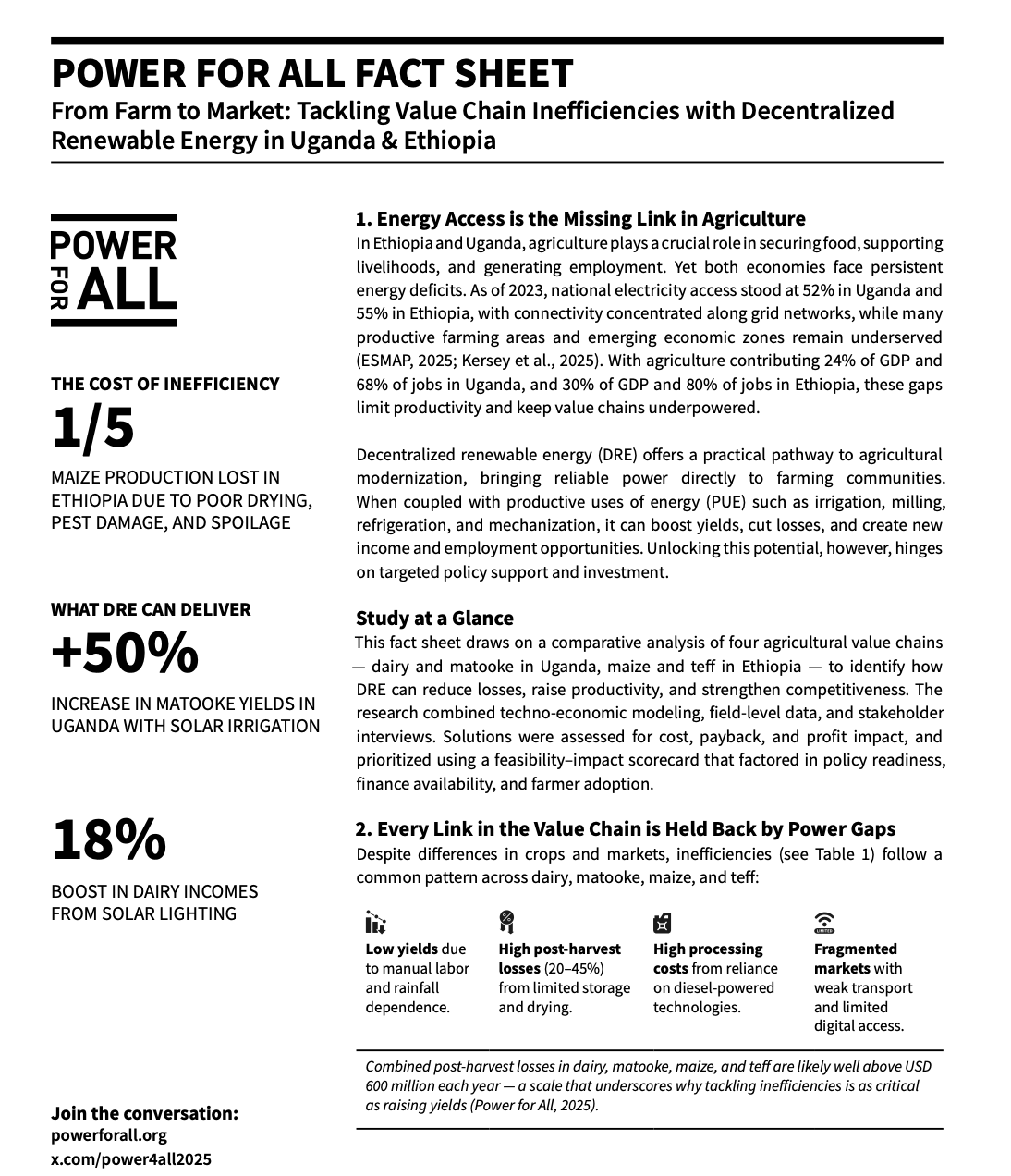
Energy Access is the missing link in agriculture - In Ethiopia and Uganda, agriculture plays a crucial role in securing food, supporting livelihoods, and generating employment. Yet both economies face persistent energy deficits.
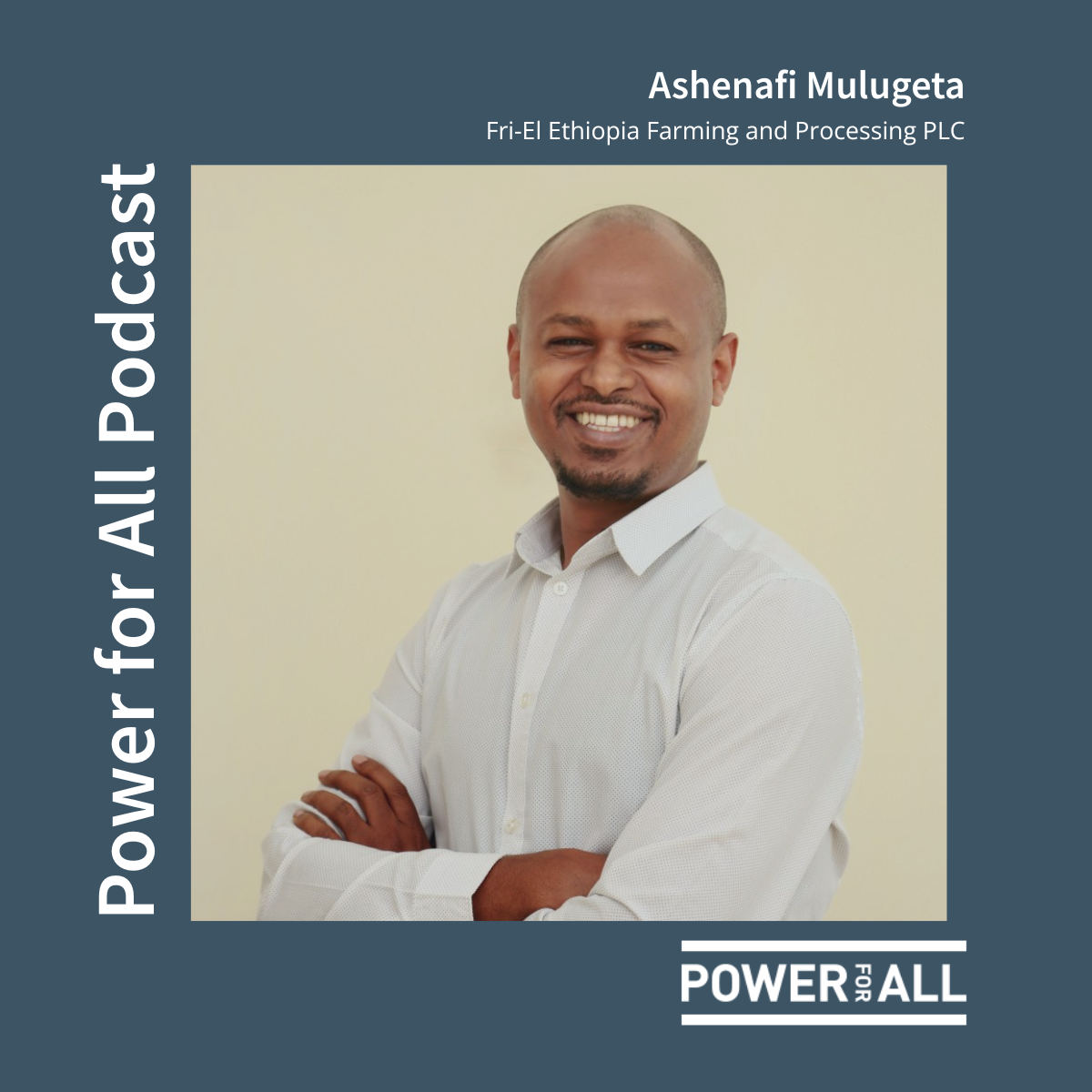
Agriculture is central to livelihoods and food security across Ethiopia and Uganda — yet much of its potential remains underpowered. Low energy access continues to limit production, processing, storage, and market connectivity. In this episode, we sit down with Ashenafi Mulugeta to discuss how DRE is unlocking new opportunities for farmers—boosting yields, reducing losses, and enabling value-added activities that strengthen rural livelihoods. Drawing on new research and firsthand experience, the conversation explores what it will take to scale these solutions, including the policies, financing models, and partnerships needed to move from pilot projects to widespread impact.
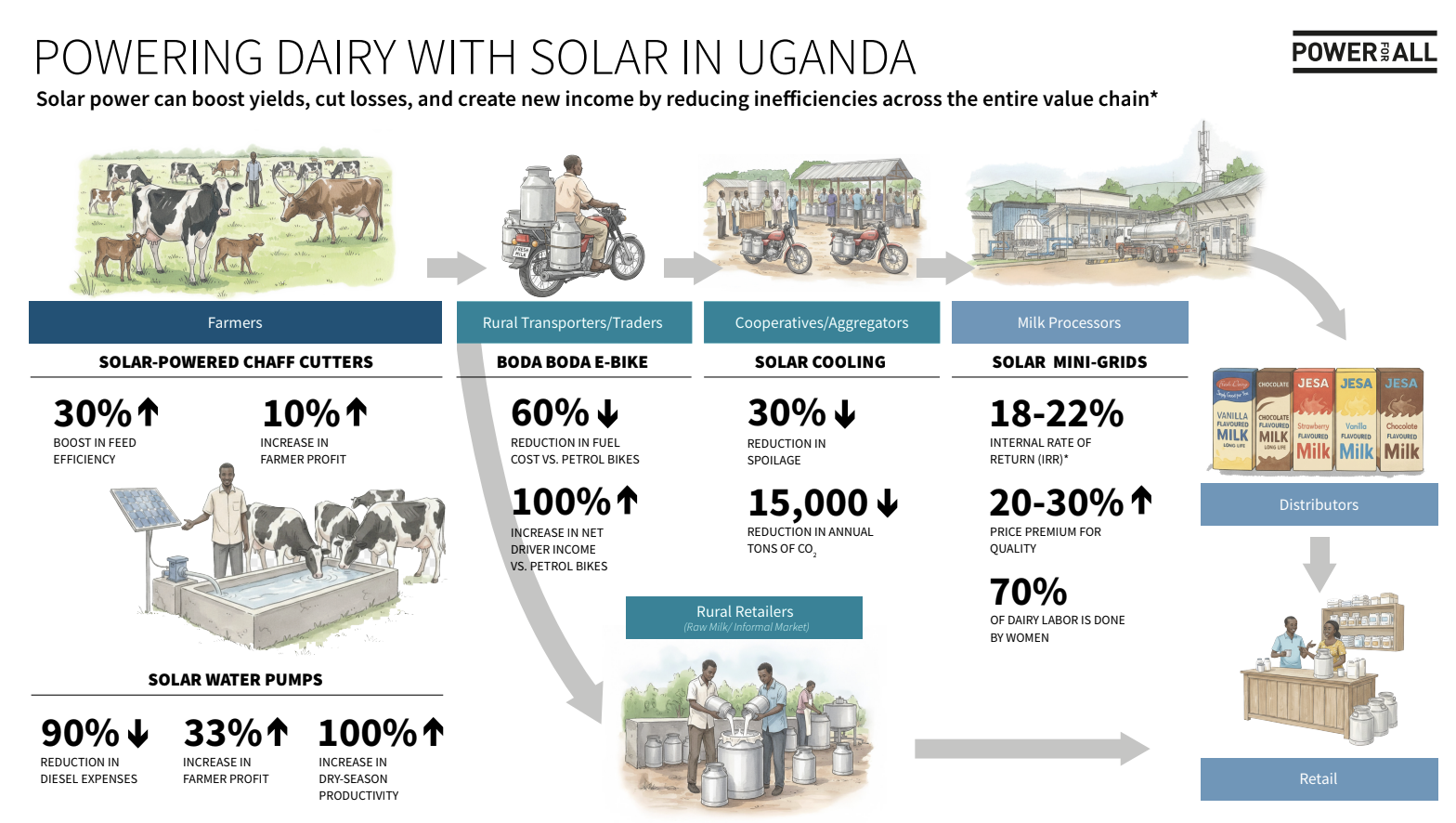
Agriculture is central to livelihoods and food security across Ethiopia and Uganda — yet much of its potential remains underpowered. Low energy access continues to limit production, processing, storage, and market connectivity. This infographic, developed as part of Power for All's research "From Farm to Market: Tackling Value Chain Inefficiencies with DRE in Uganda and Ethiopia", depicts the potential opportunities and impact for DRE intervention across the dairy value chain in Uganda.